Some places
are not built.
They are summoned.
“We came looking for a building. We found something that had spent decades waiting to be woken up.”
Not every idea is born from a blueprint or a boardroom. Some come from an obsession — from the unsettling certainty that two apparently incompatible worlds (the ceremonial precision of Japanese street cooking and the captivating darkness of horror) could not only coexist, but were always destined to meet.
This is the story of El Sanatorio. Not the one you’ll read in a press release. The real one.
-
Yaki — Fire The living ember. The smoke that rises. The heat of binchotan charcoal that turns raw matter into ritual. Every skewer is a small act of alchemy.
-
Tori — The Bird A symbol of passage between worlds. In Japanese myth, the crow guides spirits. On our grill, it becomes something sublime.
-
Kai — The Strange The kaidan. The ghost story. That feeling that something is moving at the edge of your eye. The pleasant discomfort of the unknown.
-
Utage — The Feast Eating is a social act, almost a sacred one. But the best feasts always carry a hint of transgression. Here, the table is a threshold.
Japanese street food
for restless souls
Yakitori is, by nature, democratic. It was born in the alleys of Tokyo, under paper lanterns, in the perfumed smoke of charcoal grills. Labourers, clerks, poets and drifters shared the same high stools, the same skewers of thigh and skin, the same cheap bottle of sake that made honest conversation possible.
Horror, by contrast, was born of what humans cannot control. The fear of the dark, of what waits on the other side, of houses with histories, of corridors that creak. But also — and very few people admit this — from a deep fascination. From that irresistible urge to look over the edge of the abyss.
At El Sanatorio we do not treat horror as decoration. We treat it as language. A language we use to build atmosphere, narrative and experience — because a good meal and a good ghost story share the same structure: tension, development, release, and a conclusion you don’t forget.
“We didn’t want to build a themed restaurant. We wanted to build a place that had a soul. Even if that soul was a little dark.”— The founders, on the origin of the project
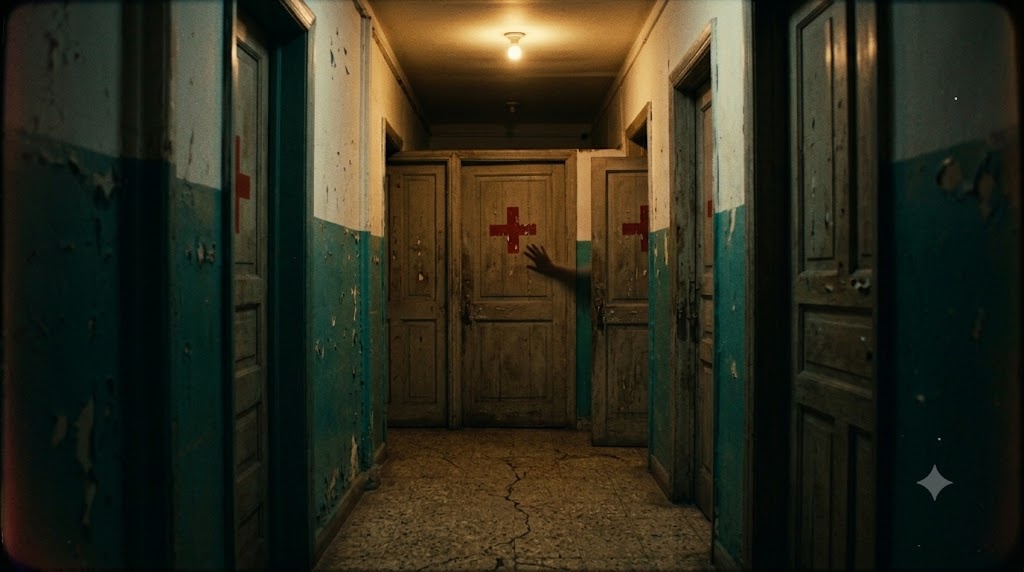
An old hospital
that refused
to be silenced
When the team at The Maia Group started looking for a location, the brief was specific: a space with character, with layers, with history visible on its walls. Nothing built yesterday. Nothing antiseptic. Something that already kept its own secrets.
What we found exceeded any expectation. The former Hospital del Tórax — annex of the historic Hospital San Juan de Dios — had passed through decades of clinical life, of abandonment, and of rebirth. High ceilings with worn mouldings. Floors that hold memory under their layers of paint. Windows that look out like eyes that have watched for too long.
The design decision was radical from the start: not to restore in order to erase the past, but to intervene in order to amplify it. Cracks that tell stories were left visible. Dark corners became deliberate corners. Architectural imperfection turned into aesthetic virtue.
The result is a space where the Japanese and the old clinical architecture speak without any apparent friction. The dark-wood counters, the skewers over the embers, the amber light of the modernised oil lamps — all of it lives alongside the century-old arches, the high ceilings, and that persistent feeling that the building has more to say than we are prepared to hear.
Because the best spaces are not designed from scratch. They are discovered, listened to, and answered — in response to what is already there, waiting.
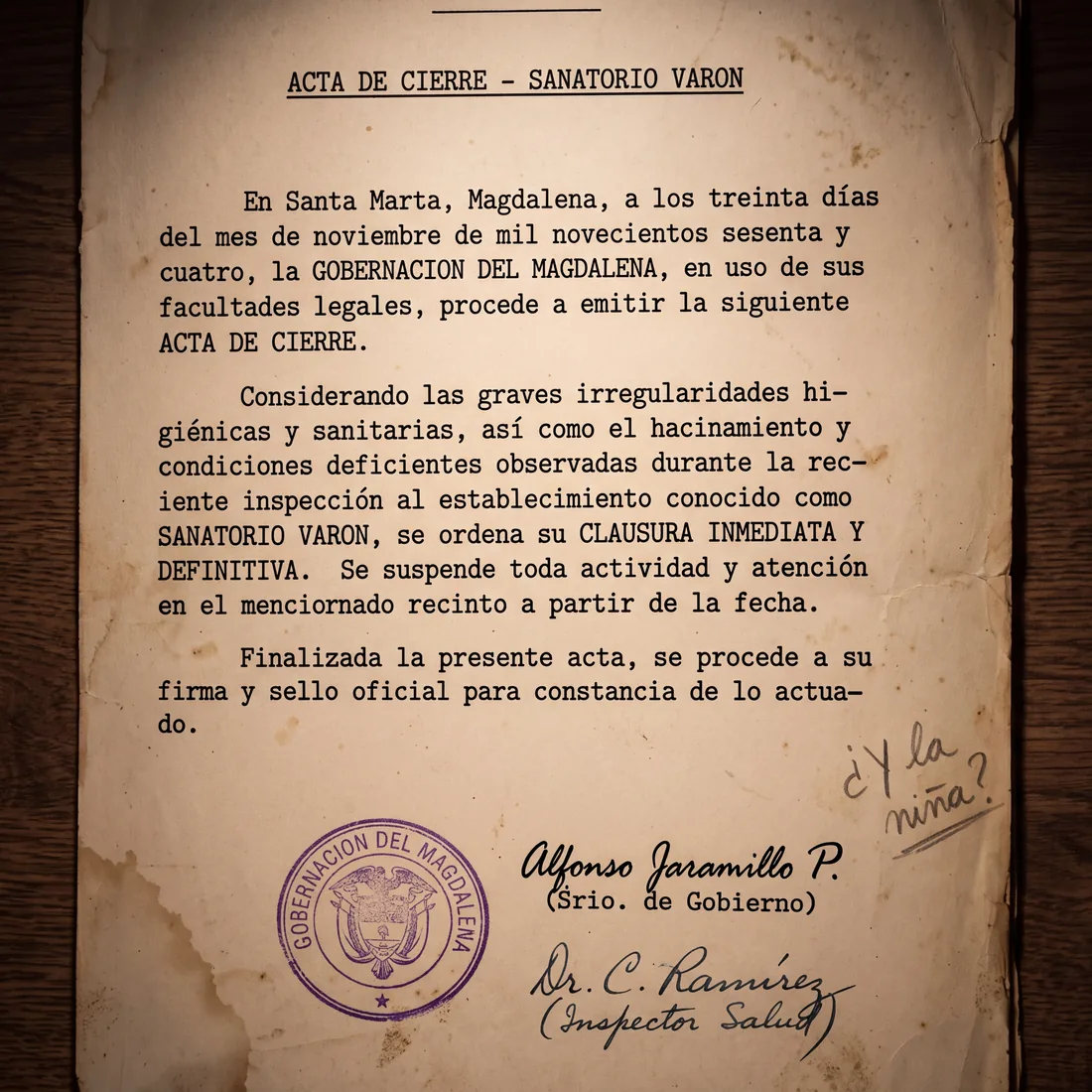
The papers that didn't burn
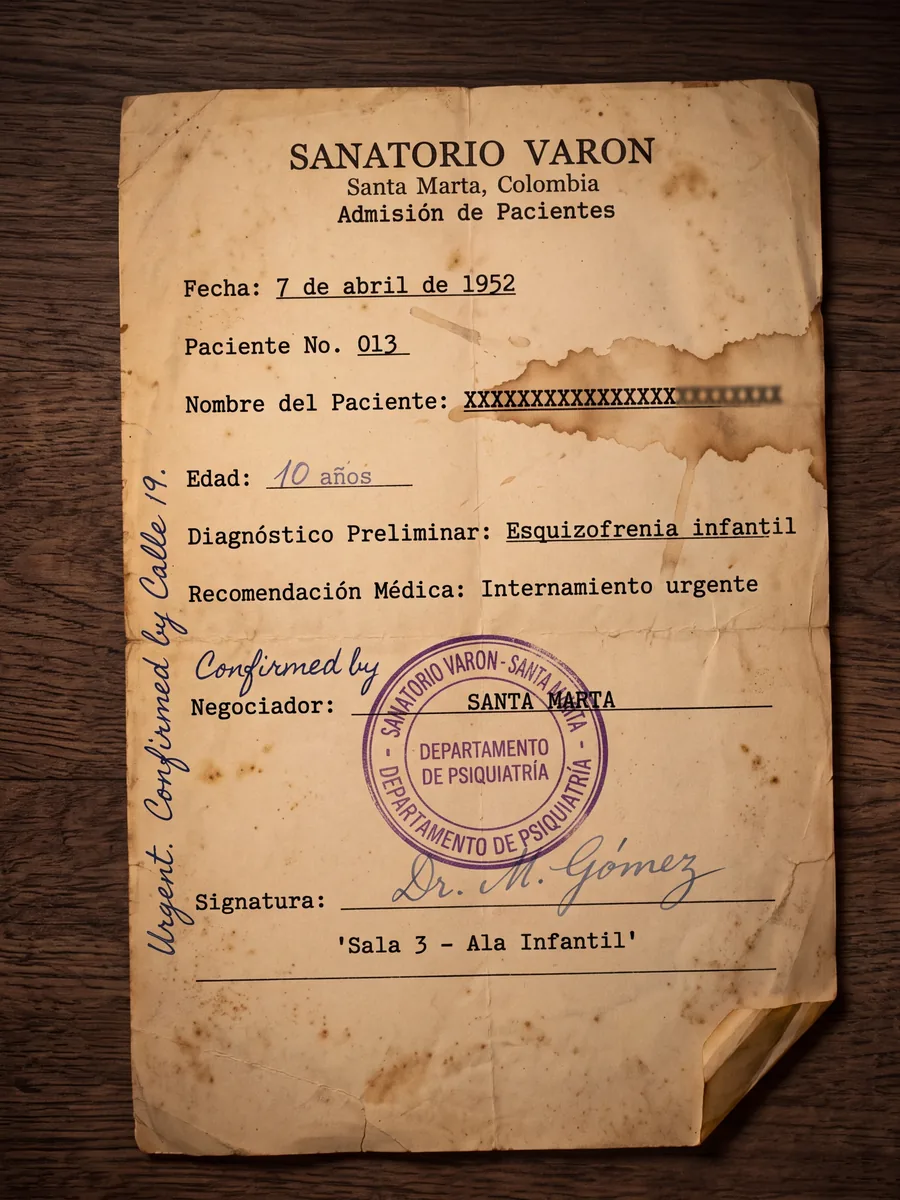
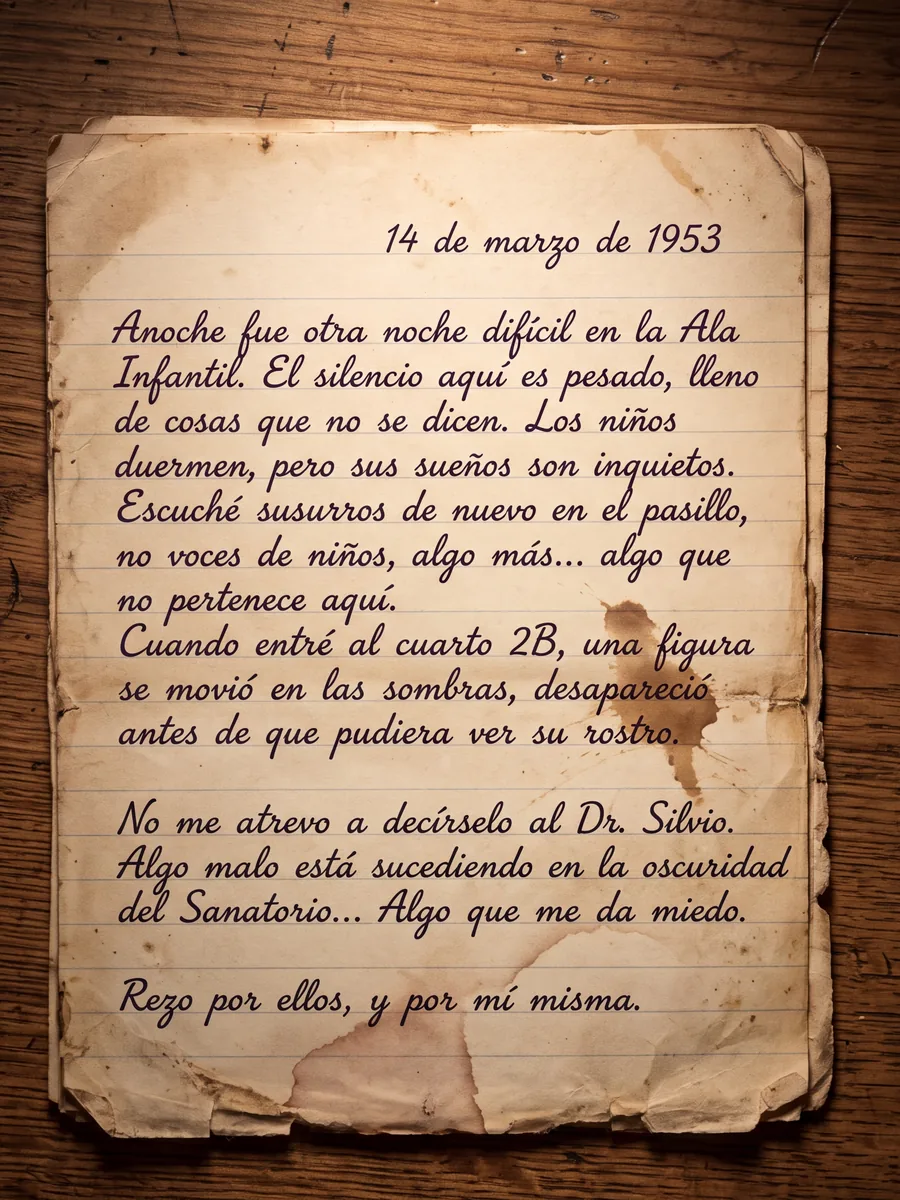
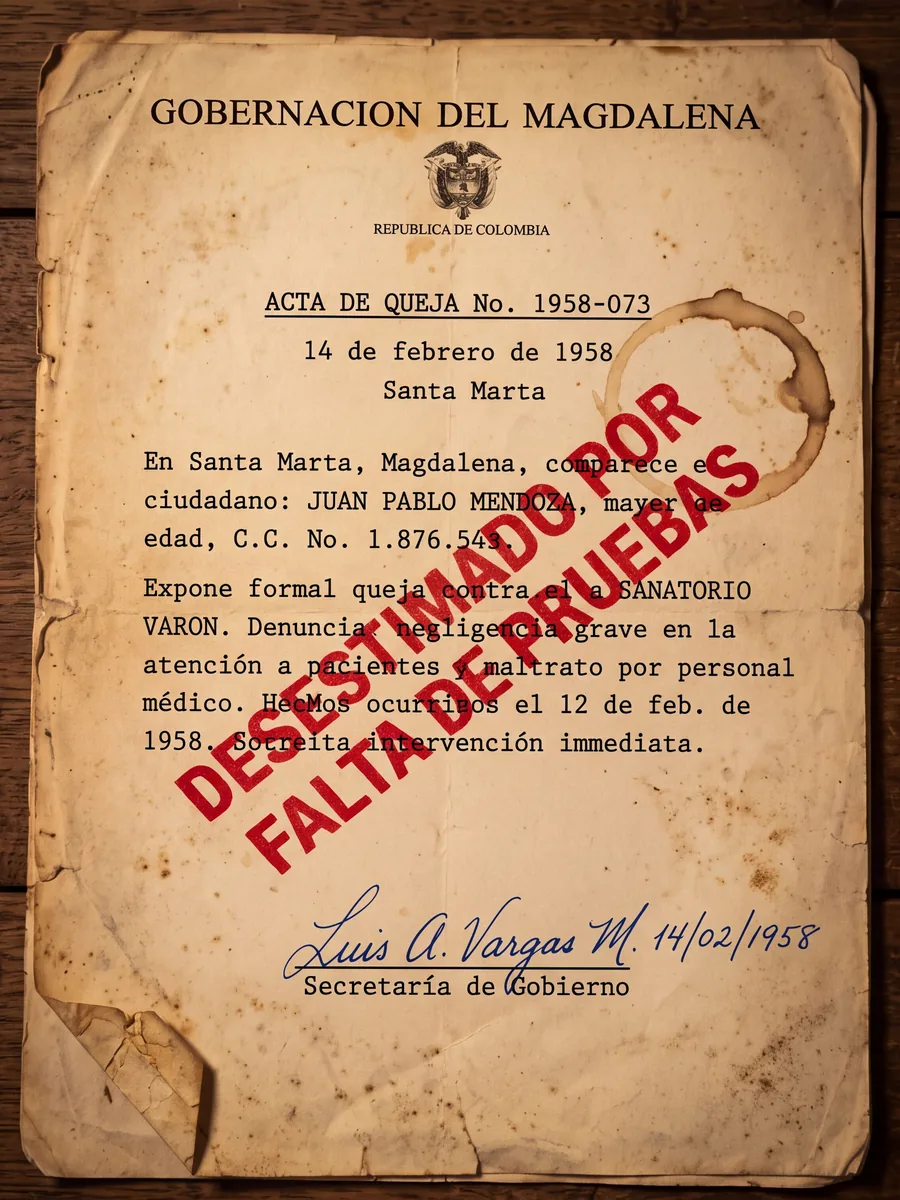
During the renovation, boxes of hospital paperwork surfaced: admission cards, nurses' diaries, records nobody wanted to sign twice. We scanned them before asking ourselves whether we should.
What we believe
We believe eating well should never be boring.
We believe that fear well administered is pleasure.
We believe the street has always known more than the elegant restaurant.
We believe that darkness has its own form of beauty.
We believe that an ember and a good skewer can be, in the right context, something close to sacred.
At El Sanatorio, the experience doesn’t begin when you sit at the table. It begins when you cross the door, when your nose picks up the first trace of binchotan, when your eyes take a second to adjust to the light. The horror here is subtle. It’s not a mask that jumps at you. It’s a presence. A weather. An atmosphere that stays with you all night.
And when you leave — fingertips lacquered with tare, ears still carrying one of the ambient sounds that haunt the place — something inside you will have shifted, just a little. That’s what we’re after. Not just that you eat well, but that you remember being here.
How we got
here
Every project worth anything follows a non-linear path. El Sanatorio was no exception. It was a string of hunches, discoveries and decisions made in the dark — metaphorically, and sometimes literally.
Part of something
larger
El Sanatorio wasn’t born in a vacuum. It’s part of The Maia Group, a collection of hospitality concepts founded on a simple but radical premise: no restaurant should look like another.
The Maia Group doesn’t build chains. It builds universes. Every concept inside the group has its own identity, its own narrative, its own visual and culinary language. What ties them together isn’t aesthetics — it’s a commitment to the radical experience. To the conviction that eating out can — and should — be memorable.
Inside that ecosystem, El Sanatorio is the darkest project, the riskiest, and perhaps the most honest. Because horror — done well — doesn’t lie. It doesn’t compromise. It doesn’t try to please everyone. And that, in hospitality, is exactly the right attitude.
Being part of The Maia Group means access to the resources, the network and the experience of a group with vision. It means that behind every decision — from the binchotan supplier to the menu design — there’s a standard of excellence that is not up for negotiation.
GROUP
Now that you know
where we come from
The doors are open. The coals are lit. All that’s left is for you to cross the threshold and see, for yourself, what’s on the other side.